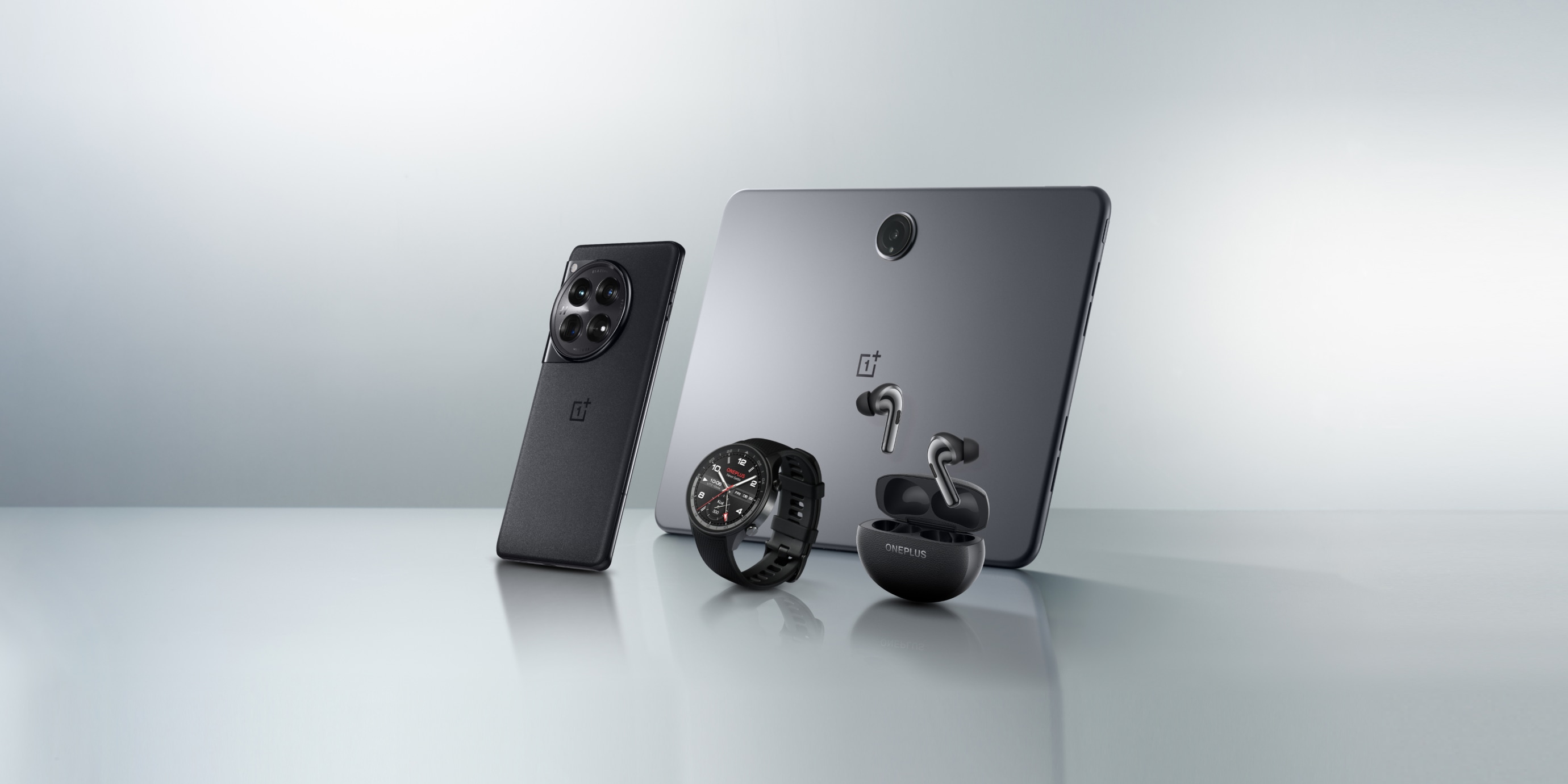
The Smartphone Brand Loyalty Crisis: What OnePlus' US Retreat Reveals About the Industry
How shifting consumer behavior, carrier dominance, and market saturation are reshaping smartphone brand survival strategies
The April 2024 announcement that OnePlus would effectively exit the US market after nearly a decade of operations didn't just represent another brand's strategic retreat—it exposed deep fissures in the smartphone industry's foundation. This move by the once-disruptive Chinese manufacturer serves as a case study in how brand loyalty has become both more valuable and more fragile in the post-pandemic technology landscape.
At its peak in 2019, OnePlus commanded 2% of the US smartphone market—a modest but meaningful share in the world's most competitive mobile ecosystem. Yet by 2023, that figure had dwindled to just 0.4%, according to Counterpoint Research. The company's decline wasn't sudden but rather the result of three converging industry shifts: the carrier consolidation effect, the premiumization paradox, and what analysts now call "the loyalty fragmentation phenomenon."
- US smartphone market grew just 1.4% YoY in 2023 (IDC)
- Average smartphone replacement cycle extended to 43 months (up from 28 months in 2018)
- 78% of US smartphone sales now occur through carrier channels (NPD Group)
- OnePlus' US market share fell from 2% (2019) to 0.4% (2023)
The Carrier Chokehold: How Distribution Channels Became Destiny
The most immediate factor in OnePlus' US struggles—and the most instructive for other brands—was its failure to secure meaningful carrier partnerships. In the US market, where 78% of smartphone sales flow through AT&T, Verizon, and T-Mobile stores, this proved fatal.
"The US is unique in how carrier-dominated it remains," explains Neil Shah, Vice President of Research at Counterpoint. "Brands like Samsung and Apple invest heavily in carrier relationships because they know that's where 80% of the purchase decisions happen. OnePlus tried to go direct-to-consumer, which works for niche players but becomes impossible to scale."
Source: NPD Group Connected Intelligence. Carrier channels have maintained 75%+ share despite direct-to-consumer growth.
The carrier dependency creates a vicious cycle: without carrier support, brands struggle to achieve scale; without scale, they can't justify the marketing spend needed to build consumer awareness; without awareness, carriers see no reason to stock their devices. OnePlus broke this cycle briefly with T-Mobile partnerships in 2018-2020, but failed to convert that temporary access into lasting relationships.
The Premiumization Paradox
OnePlus' original value proposition—"flagship killers" offering 90% of premium features at 70% of the price—collapsed as the entire industry shifted upward. The average US smartphone price reached $844 in 2023 (up from $612 in 2018), while OnePlus' prices converged with Samsung and Apple's rather than maintaining their discount positioning.
| Brand | 2018 Avg. Price | 2023 Avg. Price | % Increase |
|---|---|---|---|
| OnePlus | $529 | $899 | 69.9% |
| Samsung | $756 | $923 | 22.1% |
| Apple | $793 | $984 | 24.1% |
Source: Wave7 Research. OnePlus' pricing strategy lost its differential advantage.
"The premiumization trend created a no-man's-land for brands like OnePlus," notes Avi Greengart, Technalysis Research founder. "They weren't cheap enough to compete with Motorola and Google's A-series, but they lacked the ecosystem stickiness of Apple or Samsung. When your only differentiator is price, and then you remove that, what's left?"
The Loyalty Fragmentation Phenomenon
Perhaps most troubling for the industry is what OnePlus' experience reveals about consumer loyalty. Traditional metrics suggested OnePlus had a fiercely loyal user base—Net Promoter Scores consistently above 60 (considered "excellent") and repeat purchase rates around 45%. Yet this loyalty proved insufficient to sustain the brand when structural challenges mounted.
This apparent paradox reflects three emerging realities:
- Loyalty ≠ Market Share: Even highly satisfied customers will defect if distribution channels disappear. When OnePlus devices became harder to find, even loyal users switched to more available brands.
- The Ecosystem Lock-in Effect: While OnePlus users loved their hardware, they weren't locked into a software ecosystem like Apple's or Samsung's. Without sticky services, hardware loyalty becomes fragile.
- Generation Z's Brand Agnosticism: Younger consumers (who represented 38% of OnePlus' US base) show 40% lower brand loyalty than older cohorts, according to Morning Consult data.
Case Study: The OxygenOS Advantage That Wasn't
OnePlus invested heavily in its OxygenOS Android skin, consistently rated among the best by enthusiasts for its clean interface and fast updates. Yet this technical superiority failed to translate into market resilience because:
- Carriers prioritize pre-loaded bloatware over user experience
- Most consumers can't distinguish between Android skins
- Google's push for more stock Android experiences reduced differentiation
"Great software doesn't sell phones—marketing and distribution do," admits a former OnePlus marketing executive. "We thought being loved by tech enthusiasts would be enough, but that's maybe 5% of the market."
Regional Ripple Effects: What OnePlus' Exit Means for Global Markets
The US retreat sends particularly strong signals to three regions:
1. India: The Last Bastion?
OnePlus maintains 18% market share in India's premium segment (>₹30,000), but faces intensifying competition from:
- Nothing Phone: Gained 3% share in 2023 by targeting the same "tech enthusiast" demographic
- iQOO/Vivo: Aggressive offline expansion with 12,000+ retail stores
- Apple: Manufacturing 7% of iPhones in India, with prices dropping to ₹50,000 range
"India remains profitable for OnePlus, but the US exit creates perception problems," warns Navkendar Singh of IDC India. "Consumers wonder: if they can't make it in America, how long before they struggle here?"
2. Europe: The Carrier Warning Signal
European markets (where OnePlus holds 3-5% share) show similar carrier consolidation trends. The UK provides a cautionary tale:
- EE (BT) reduced OnePlus shelf space by 60% in 2023
- Three UK dropped OnePlus entirely in favor of Samsung A-series
- Carphone Warehouse (major retailer) now stocks only carrier-approved devices
3. China: The Innovation Dilemma
In its home market (where OnePlus holds just 1.2% share), the brand faces an existential question: should it:
- Double down on foldable innovation (where it lags Huawei and Samsung)
- Return to its "flagship killer" roots with aggressive pricing
- Merge more completely with Oppo (its parent company) to reduce costs
- Huawei: 48% share
- Samsung: 22% share
- OnePlus: 3% share (with only one model)
- Market growth: 128% YoY
Source: Counterpoint. OnePlus risks being left behind in the next form factor shift.
Four Hard Lessons for the Smartphone Industry
1. The Myth of the "Enthusiast Brand"
OnePlus' experience demolishes the notion that passionate user communities can sustain a hardware business at scale. Consider the numbers:
- OnePlus had 1.2M active community forum members (2023)
- But sold only 400K units in the US (2023)
- Conversion rate: ~0.03% of engaged users to purchases
"Enthusiasts will cheer your launches but won't necessarily buy your products when cheaper alternatives exist," notes Anshel Sag of Moor Insights. "The business case for niche brands has never been harder."
2. The Carrier Tax on Innovation
Carrier requirements add $30-$50 to each device's BOM (Bill of Materials) through:
- Mandatory pre-loaded apps (AT&T adds 14 apps)
- Carrier-specific software customizations
- Certification testing costs
"This 'carrier tax' makes it impossible for smaller brands to compete on price," explains a former OnePlus supply chain manager. "We either build carrier-compliant devices at higher cost, or get locked out of 80% of sales channels."
3. The Ecosystem Moat Deepens
Apple and Samsung now control 72% of US smartphone profits through:
- Apple: iMessage (62% of US teens use), Apple Pay (52% of US users), AirDrop ecosystem
- Samsung: Knox security (enterprise adoption), Dex desktop mode, SmartThings integration
"OnePlus proved that great hardware isn't enough," says Carolina Milanesi of Creative Strategies. "Without services that create switching costs, you're always one carrier decision away from irrelevance."
4. The Direct-to-Consumer Dead End
OnePlus' US website traffic tells the story:
- 2019: 8.2M monthly visitors
- 2021: 4.1M monthly visitors
- 2023: 1.8M monthly visitors
"The data shows that even digital-native brands can't escape physical retail's gravity," explains Juho Sarvikas, former HMD Global CEO. "When carriers stop promoting you, your discovery problem becomes existential."
What Comes Next: Three Possible Industry Futures
Scenario 1: The Carrier Oligopoly Tightens (60% Probability)
If current trends continue:
- By 2026, 90% of US smartphone sales will flow through carriers
- Only 3-4 brands (Apple, Samsung, Google, possibly Motorola) will maintain carrier support
- Chinese brands will retreat to emerging markets where carrier power is weaker
Scenario 2: The Regulatory Intervention (25% Probability)
Potential triggers:
- FTC investigation into carrier anti-competitive practices (rumored for 2025)
- EU Digital Markets Act extensions to hardware distribution
- State-level "right to repair" laws that weaken carrier control
Scenario 3: The Ecosystem Wars Escalate (15% Probability)
If Apple and Samsung push ecosystem lock-in further:
- Cross-platform services (like RCS) get deprioritized
- Hardware innovation stagnates as switching costs rise
- Regulators force interoperability (similar to USB-C mandate)
- "By 2027, we'll see only one viable Android alternative to Samsung in the US—most likely Google." — Ben Wood, CCS Insight
- "The next battleground is foldables, where carrier control is weaker because the category is new." — Linda Sui, Strategy Analytics
- "OnePlus' exit is the canary in the coal mine—expect Xiaomi and Oppo to follow within 18 months." — Will Wong, IDC