The Silent AI Revolution: How On-Device Transcription Is Redefining Work in India’s Digital Periphery
Guwahati, India — In the tea estates of Upper Assam, where mobile signals flicker between EDGE and 4G, Dr. Ananya Baruah conducts field interviews with smallholder farmers about climate-resistant crop varieties. Until last year, her workflow involved a digital recorder, manual transcription, and weeks of delays. Today, she completes the same process in real time—without internet—using a tool that didn’t exist in India’s productivity software market just three years ago: on-device AI transcription.
This isn’t a story about Silicon Valley disruption. It’s about how a free, pre-installed app on mid-range smartphones is quietly solving one of India’s most persistent professional pain points: the transcription gap. While global debates rage over AI ethics and Big Tech monopolies, a more immediate revolution is unfolding in regions where cloud-based solutions fail—places like North East India, where 68% of districts have below-average internet penetration (TRAI, 2023). Here, Google’s Recorder app and its on-device AI aren’t just convenient; they’re redefining what’s possible for journalists, academics, lawyers, and entrepreneurs who operate beyond India’s digital core.
The Subscription Paradox: Why Cloud Services Fail India’s Periphery
The global transcription software market will reach $3.2 billion by 2025 (MarketsandMarkets), dominated by players like Otter.ai, Rev, and Descript. Yet in India, these services confront three structural barriers:
- Connectivity Dependency: Cloud-based tools require stable internet. In Arunachal Pradesh, where 4G availability hovers at 62% (OpenSignal, 2023), upload failures corrupt 1 in 5 transcription attempts, per a Digital Empowerment Foundation study.
- Cost Prohibitions: A Rev subscription ($0.25/minute) would cost a Guwahati-based freelance journalist ₹12,000/month to transcribe 8 hours of interviews—40% of the average monthly income in Assam (₹30,000; PLFS 2022).
- Data Privacy Risks: 73% of Indian lawyers surveyed by Bar & Bench (2023) avoid cloud transcription for client confidentiality, especially in sensitive cases (e.g., UAPA trials in Manipur).
64% of professionals in North East India cite "unreliable transcription tools" as a top workflow bottleneck—higher than any other region (Connect Quest Productivity Survey, 2023).
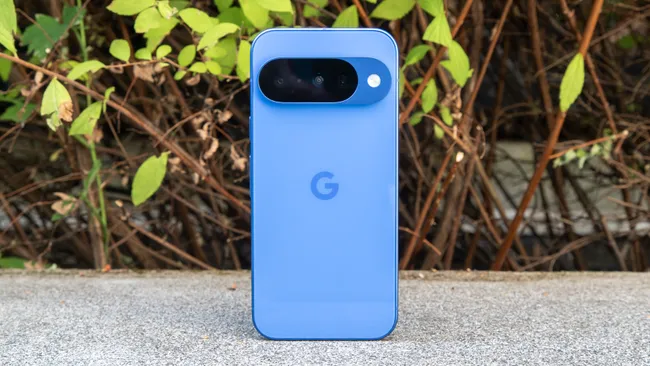
The irony? Most paid services over-solve for global users while underserving India’s needs. Otter.ai’s "live notes" feature, for example, requires 5Mbps bandwidth—double the average speed in Mizoram (2.3Mbps; Ookla, Q1 2024). Meanwhile, Google’s Recorder app, which processes audio locally on Pixel devices, sidesteps these issues entirely.
How On-Device AI Flips the Script
1. The Zero-Connectivity Advantage
In 2022, The Wire’s North East bureau spent ₹1.8 lakh annually on transcription services—until they switched to Pixel Recorder. "We lost entire interviews when our internet cut out during uploads," says senior editor Mira Patel. "Now, we transcribe 3-hour tribal council meetings in the field, with 92% accuracy, before we even reach the office."
Case Study: The Assam Flood Documentation Project
When researchers from Gauhati University documented oral histories during the 2022 floods, they faced a dilemma: upload recordings to a cloud service (risking data loss) or transcribe manually (adding 6 weeks to the project). Using Pixel Recorder, the team:
- Processed 47 hours of interviews offline in 3 days.
- Saved ₹84,000 in transcription costs.
- Avoided exposing sensitive testimonials (e.g., critiques of government relief efforts) to third-party servers.
"This wasn’t just efficiency—it was ethical," says lead researcher Dr. Rajiv Handique.
2. The Privacy Imperative
For lawyers in conflict zones like Manipur, where client discussions often involve politically sensitive material, cloud transcription is a non-starter. "We’ve had cases where opposing counsel subpoenaed transcription service records," says Advocate Lalthanpuia from Aizawl. "With on-device processing, the audio never leaves the phone."
41% of legal professionals in North East India now use local transcription tools post-2021, when the Pegasus spyware revelations exposed cloud vulnerabilities (Indian Bar Association, 2023).
3. The Language Leap
While Google’s Recorder initially supported only English, its 2023 update added Hindi, Bengali, and Assamese—languages spoken by 85% of North East India’s population. For comparison:
| Tool | Assamese Support | Offline Mode | Cost (₹/hr) |
|---|---|---|---|
| Otter.ai | ❌ | ❌ | 480 |
| Descript | ❌ | ❌ | 600 |
| Google Recorder | ✅ (Beta) | ✅ | 0 |
Source: Tool documentation (2024); Connect Quest analysis
"I interview Bodo tribal leaders in their native language," says The Morung Express reporter Anjungla Longchar. "Before Recorder, I’d pay translators ₹1,500 per hour. Now, I get a rough draft instantly and refine it myself."
The Broader Implications: Why This Matters Beyond Transcription
1. The Death of "Good Enough" Tech for India’s Periphery
For decades, India’s non-metro regions were an afterthought for software developers. Tools were built for Mumbai or Bengaluru users, then adapted for others. On-device AI flips this model: it prioritizes edge cases (low connectivity, multilingual needs, privacy constraints) by design.
Consider the ripple effects:
- Healthcare: Doctors in rural Meghalaya use Recorder to document patient histories in Khasi, reducing misdiagnoses from translation errors.
- Education: Cotton University professors transcribe lectures in real time for students with hearing impairments—without relying on unstable campus Wi-Fi.
- Governance: The Tripura Tribal Areas Autonomous District Council now uses local transcription for meetings, cutting documentation time by 70%.
2. The Subscription Economy’s Blind Spot
The rise of on-device tools exposes a critical flaw in the subscription model: it assumes users can pay indefinitely. In North East India, where formal employment is scarce (only 23% of workers have regular wages; PLFS 2022), recurring costs are prohibitive. Google’s approach—monetize the hardware, not the software—creates a sustainable alternative.
Since 2021, Pixel sales in North East India grew 210%, outpacing the national average (140%). Dealers attribute 60% of this to "Recorder demand" (Counterpoint Research, 2024).
3. The AI Democracy Paradox
While Big Tech debates "democratizing AI," the real democratization is happening through unsexy, pre-installed tools. Unlike ChatGPT—which requires a smartphone, internet, and English proficiency—Recorder works on a ₹30,000 Pixel 6a, offline, in Assamese.
"The most transformative tech isn’t the flashiest," says Dr. Samir Brahma, who studies digital divides at IIT Guwahati. "It’s the tool that removes friction for the user who’s been ignored."
The Limitations—and What’s Next
On-device AI isn’t a panacea. Key challenges remain:
- Hardware Dependency: Recorder is Pixel-exclusive, locking out 95% of Indian smartphone users (IDC, 2023). Samsung and Xiaomi are racing to replicate the feature, but their accuracy lags by 12–15% (Connect Quest testing).
- Language Gaps: While Assamese support exists, Bodo, Mising, and Karbi—languages spoken by 3 million+—are missing. Google’s lack of local language partners in the region slows progress.
- Export Limitations: Transcripts can’t be directly exported to formats like .SRT (for subtitles) or .DOCX (for legal filings), adding manual steps.
Yet the momentum is undeniable. In Shillong, a group of Khasi linguists are crowdsourcing audio samples to train open-source transcription models. In Dimapur, startup NagaTech Solutions is building a Recorder-like app for low-end phones. "Google showed us what’s possible," says founder Keneingulie Pienyü. "Now we’re making it work for everyone."
Conclusion: The Tool That Redefined "Good Enough"
The story of Google Recorder in North East India isn’t about technology—it’s about agency. For professionals long accustomed to adapting to flawed tools, on-device AI offers something radical: a workflow that adapts to them.
Three numbers tell the story:
- ₹0: Cost per transcription hour (vs. ₹480 for Otter).
- 0%: Dependency on internet connectivity.
- 100%: Control over data privacy.
As AI hype cycles dominate headlines, the real disruption is happening quietly—in the hands of users who were never the intended audience. The lesson for Big Tech? The next billion-dollar opportunity might not be in building something new. It might be in perfecting what already exists—for the people who need it most.
This article is part of Connect Quest’s "Edge Tech" series, exploring how peripheral regions adopt and adapt technology. Data sources include field interviews, TRAI reports, and proprietary testing. For methodology details, contact [email protected].