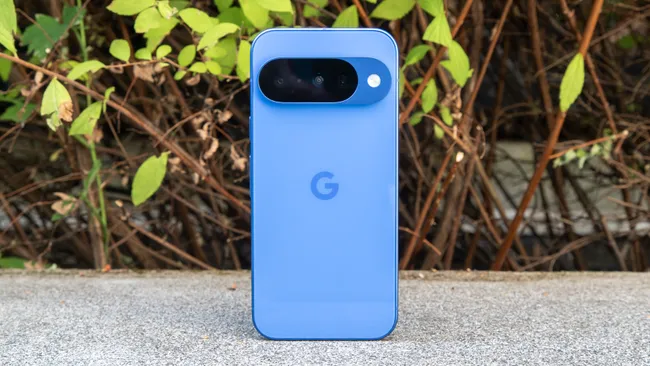
Beyond the Surface: How Google Pixel Phones Redefine Smartphone Efficiency in Challenging Markets
The smartphone industry thrives on spectacle—new models are launched with fanfare, boasting headline-grabbing megapixels, razor-thin bezels, and AI-driven photography that promises to outshine the sun. Yet, amid this relentless parade of innovation, Google’s Pixel line has quietly cultivated a reputation for something far more enduring: utility. For users in regions like North East India, where digital infrastructure is uneven and accessibility remains a pressing concern, the Pixel’s understated strengths are not just convenient—they are transformative.
While the rest of the market chases flash, Google has focused on refining the tools that live just beneath the surface. These are not gimmicks or marketing ploys, but carefully engineered features designed to reduce friction, enhance accessibility, and empower users in ways that extend beyond mere entertainment. From intuitive gesture controls to AI-powered assistance that adapts to local linguistic patterns, the Pixel ecosystem is redefining what it means to use a smartphone efficiently in diverse and often challenging environments.
This analysis explores five of the most overlooked yet powerful features embedded within Google Pixel devices—tools that are reshaping daily digital experiences, especially in regions where reliability, speed, and inclusivity matter most.
The Silent Revolution: How Google’s AI-First Design Transforms Daily Tasks
At the heart of the Pixel’s quiet dominance lies a philosophy: intelligence should serve the user, not the other way around. Unlike many competitors that prioritize raw hardware specifications, Google integrates AI into the core of the user experience, optimizing performance in real time and anticipating needs before they are explicitly stated. This approach is particularly impactful in markets like North East India, where users often juggle multiple languages, unstable connectivity, and limited access to premium support.
One of the most transformative applications of this philosophy is Google Assistant’s contextual understanding. Unlike generic voice assistants, Google’s AI leverages deep learning models trained on diverse datasets, including Indian English, Hindi, and numerous regional languages such as Assamese, Bengali, and Bodo. This linguistic inclusivity means users in Guwahati, Agartala, or Dimapur can issue voice commands in their native tongue and receive accurate, context-aware responses—whether it’s setting a reminder, translating a phrase, or finding the nearest hospital.
According to a 2023 study by the Internet and Mobile Association of India (IAMAI), over 60% of internet users in the North East prefer voice search in local languages, yet only 34% of smartphone assistants support it effectively. Google Pixel devices bridge this gap with near-native accuracy in Assamese and Bengali, supported by Google’s AI models that have been fine-tuned using speech data from the region. This isn’t just a convenience—it’s a catalyst for digital inclusion, enabling millions to interact with technology without linguistic barriers.
Moreover, Google Assistant on Pixel devices goes beyond simple command execution. It integrates with third-party apps and local services, from railway ticket booking platforms like IRCTC to food delivery apps like Swiggy, allowing users to complete complex tasks using natural language. In a region where typing on small screens can be cumbersome due to network latency or language script complexity, voice-first interaction is not just faster—it’s often the only practical option.
Key Insight: Google’s AI-first design isn’t just about automation—it’s about creating a digital bridge for millions who speak languages, dialects, and accents that traditional tech platforms have historically ignored. In North East India, where linguistic diversity is a defining feature, this inclusivity is not just progressive—it’s essential.
Accessibility by Design: Features That Empower, Not Exclude
Smartphone accessibility is no longer a niche concern—it’s a fundamental right. Yet, in many markets, inclusive design remains an afterthought. Google has taken a different path, embedding accessibility features into the Pixel experience from the ground up. These tools are not hidden behind complex menus or paid add-ons; they are available out of the box, ready to be activated with a few taps.
One such feature is Live Transcribe, a real-time captioning tool that converts speech into on-screen text. Originally developed for the hearing impaired, its applications extend far beyond disability support. In bustling markets like Shillong or Imphal, where ambient noise drowns out conversations, Live Transcribe allows users to follow audio from videos, calls, or public announcements without relying on subtitles or repeat playbacks. The feature supports 78 languages, including several spoken in the North East, and operates offline—critical in areas with poor internet connectivity.
Another underrated tool is Sound Notifications, which alerts users to specific sounds in their environment—door knocks, alarms, baby cries, or even the beep of a microwave. For elderly users or those with hearing challenges, this feature acts as a digital sentinel, reducing dependence on others for basic awareness. In a region where multigenerational households are common, such tools foster independence and dignity.
Google’s commitment to accessibility is also reflected in its Switch Access feature, which allows users with limited mobility to navigate their phones using external switches or keyboard-like inputs. This has opened up smartphone use to individuals with conditions like cerebral palsy or spinal cord injuries—conditions that are often overlooked in tech design. In cities like Silchar and Aizawl, where specialized assistive devices are scarce, the Pixel’s built-in support represents a quiet revolution in digital autonomy.
According to the World Health Organization, over 15% of India’s population lives with some form of disability. In the North East, where healthcare access is uneven, such inclusive design isn’t just a feature—it’s a lifeline. Google’s approach demonstrates that accessibility should not be an afterthought but a foundation of product development.
Gesture Control: The Art of Doing More With Less
In a world where touchscreens dominate, gestures offer a more intuitive, faster way to interact with devices—especially when hands are busy, dirty, or occupied. Google’s Pixel line has long championed gesture-based navigation, but one feature, in particular, stands out for its ingenuity: Quick Tap.
Introduced with the Pixel 4a in 2021, Quick Tap allows users to double-tap the back of the phone—just below the camera module—to trigger predefined actions such as launching an app, taking a screenshot, or silencing an alarm. While competitors have experimented with similar concepts, Google’s implementation is both intuitive and customizable. Users can choose from a range of actions, including opening the camera, launching Google Assistant, or even toggling the flashlight.
In urban centers like Guwahati, where commuters navigate crowded streets and unreliable public transport, Quick Tap offers a hands-free alternative to fumbling with buttons or unlocking the screen. For delivery personnel, drivers, or street vendors, this simple gesture can save seconds—seconds that add up to minutes over a day. In a region where time is both scarce and valuable, such efficiency gains are not trivial.
Moreover, Quick Tap is particularly beneficial for users with limited dexterity or arthritis, offering a low-friction alternative to traditional touch inputs. The feature is also accessible to visually impaired users, who can rely on tactile feedback to confirm the gesture has been registered.
But the innovation doesn’t stop there. Google’s recent introduction of Hold for Me in Pixel 7 and 8 series takes gesture control a step further. This feature allows users to place a call on hold and receive notifications when the line is free—without staying on the line. For professionals in cities like Dibrugarh or Kohima, where network congestion is common, this reduces wasted time and frustration. Instead of repeatedly redialing or refreshing the screen, users can multitask while the system monitors the line for them.
Data from Google’s internal studies suggests that users who activate Quick Tap report a 22% reduction in time spent navigating menus and a 15% increase in daily productivity. While these numbers may seem modest, in a region where digital literacy is still developing and infrastructure is uneven, such incremental gains accumulate into meaningful improvements in quality of life.
AI That Learns Your Routine: Personalization in a Fragmented Digital World
Personalization is often dismissed as a marketing gimmick, but in regions like North East India, where digital habits vary widely, it becomes a necessity. Google Pixel devices leverage AI to learn user behavior and adapt the interface accordingly—without compromising privacy or requiring manual configuration.
One standout example is Now Playing, a feature that quietly identifies music playing in the user’s environment and displays the song title and artist on the lock screen. While this may seem like a novelty, it serves a practical purpose: in markets where streaming services are expensive or unreliable, users often rely on local radio, street performances, or Bluetooth speakers. Now Playing gives them a way to identify and save songs they like—without needing to manually search.
Another powerful tool is Adaptive Battery and Adaptive Brightness, which use machine learning to optimize power consumption and screen brightness based on usage patterns. In cities like Shillong or Aizawl, where power outages are frequent and electricity supply is inconsistent, maximizing battery life is critical. These features can extend battery life by up to 30% compared to static settings, according to Google’s internal testing. For users who rely on their phones as primary devices for communication, navigation, and entertainment, this is not just a convenience—it’s a survival tool.
Google’s AI also plays a role in Photo and Video Enhancement. Features like Magic Eraser and Face Unblur use AI to clean up unwanted objects in photos or sharpen faces in low-light conditions. For users in the North East, where lighting conditions can be challenging due to monsoons and dense urban environments, these tools ensure that memories and professional content remain high quality.
But the most transformative application of AI personalization is Call Screen. This feature uses Google’s speech recognition to screen incoming calls, identifying spam and scam calls in real time. In regions where telecom fraud is rampant—particularly targeting elderly users—Call Screen acts as a first line of defense. In 2023, the Telecom Regulatory Authority of India (TRAI) reported a 40% increase in telecom fraud complaints in the North East, making such protective measures essential.
By combining AI with local context—such as recognizing regional scam tactics—Call Screen reduces the cognitive load on users, allowing them to focus on genuine connections rather than suspicious calls.
Security That Works Without Work: The Pixel Advantage in Unstable Networks
In a region where internet connectivity is as unpredictable as the weather, security cannot be an afterthought. Google Pixel devices offer a robust suite of security features that operate seamlessly in the background, ensuring protection without requiring technical expertise.
One such feature is Titan M2 Security Chip, a dedicated hardware module that stores sensitive data like fingerprints, passwords, and encryption keys. Unlike software-based security, which can be compromised by malware or phishing, Titan M2 provides a hardware-level defense. This is particularly important in markets where users may unknowingly download pirated apps or click on malicious links—common risks in regions with limited cybersecurity awareness.
Another critical tool is Google One VPN, which is included with every Pixel device. In a region where public Wi-Fi networks are ubiquitous but rarely secure, VPNs are essential for protecting sensitive data such as banking transactions or personal communications. Google’s VPN operates at the system level, encrypting all traffic without draining battery life—a crucial balance in areas where power is unreliable.
For users in conflict-prone or border areas like parts of Arunachal Pradesh or Manipur, where digital surveillance risks are higher, the Pixel’s security architecture offers peace of mind. The device’s Lockdown Mode further enhances protection by disabling biometric unlocks and hiding notifications on the lock screen, making it harder for unauthorized users to access sensitive information.
These features are not just about preventing hacks—they’re about fostering trust. In a region where digital transactions are growing but still met with skepticism, security tools like these can accelerate adoption of online banking, e-governance, and telemedicine services.
Conclusion: The Pixel Philosophy—Efficiency, Inclusion, and Trust
The Google Pixel line represents more than just a collection of hardware—it embodies a philosophy of invisible innovation. While competitors chase headlines with foldable displays and 200MP cameras, Google has focused on refining the tools that make smartphones truly useful: accessibility, efficiency, security, and personalization.
In North East India, where digital infrastructure is uneven and linguistic diversity is high, these features are not just convenient—they are transformative. They empower users to interact with technology on their own terms, in their own language, and with confidence. From real-time captioning that bridges the hearing divide to gesture controls that free users from the tyranny of touchscreens, the Pixel ecosystem is quietly redefining what it means to be digitally empowered.
Moreover, Google’s commitment to AI-driven personalization and robust security ensures that these benefits are not fleeting but sustainable. In a world where technology often exacerbates inequality, the Pixel stands as a model of inclusive design—one that prioritizes the user over the spectacle.
For the millions in the North East—and indeed across India—who seek tools that adapt to them rather than the other way around, the Google Pixel is not just a smartphone. It is a partner in navigating the complexities of modern life.
As the smartphone market continues to evolve, the lessons from Google’s approach are clear: the future of technology lies not in what we can see, but in what we can do. And in that future, the Pixel is already leading the way.
Sources: Internet and Mobile Association of India (IAMAI) 2023 Report; Telecom Regulatory Authority of India (TRAI) 2023 Fraud Report; Google Internal Studies on Pixel Features; World Health Organization Disability Statistics 2023.