The High-Stakes Experiment: How Apple’s AI Strategy Could Reshape Digital Ecosystems—or Fall Flat
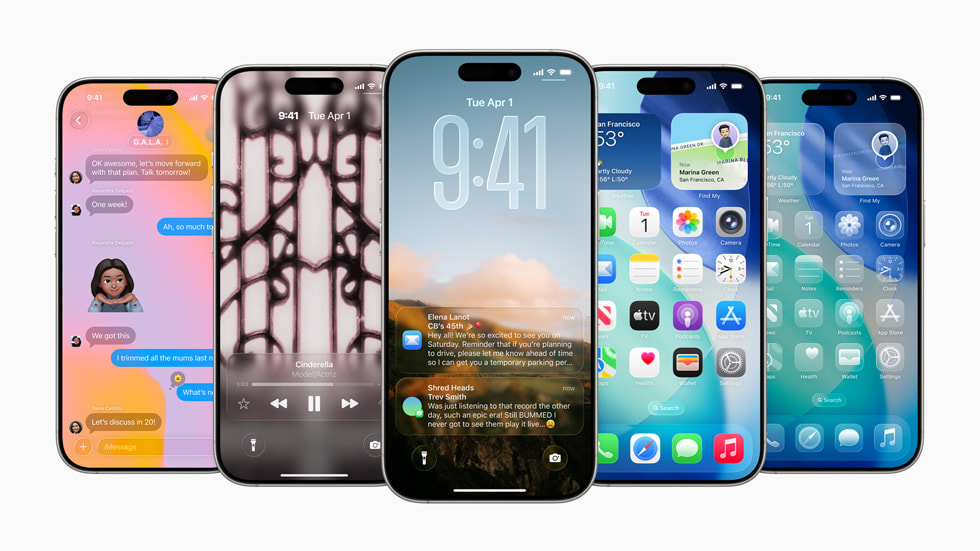
In the summer of 2026, as Silicon Valley’s AI gold rush entered its fourth year, Apple made a calculated bet that could either cement its dominance in consumer technology or expose the limits of its walled-garden philosophy. The company’s long-awaited AI overhaul wasn’t just another incremental update—it was a declaration that the future of artificial intelligence might look radically different from what Google, Microsoft, and Meta had envisioned. By doubling down on on-device processing, privacy-centric design, and deep ecosystem integration, Apple isn’t just competing in the AI wars; it’s attempting to redefine the rules of engagement.
Yet the stakes extend far beyond Cupertino’s campus. For regions like North East India—where smartphone adoption is surging but digital infrastructure remains uneven—Apple’s approach could either bridge critical gaps in accessibility or become another example of how cutting-edge technology struggles to adapt to local realities. The question isn’t just whether Apple’s AI can match the capabilities of ChatGPT or Gemini, but whether its “intelligence as a feature, not a product” strategy can survive in a market where consumers are increasingly skeptical of AI’s practical value.
The Late-Mover’s Dilemma: Why Apple’s AI Timing Is Both a Risk and an Opportunity
The Historical Context: How Apple Ceded Early Ground
When OpenAI’s ChatGPT exploded onto the scene in late 2022, it triggered what analysts now call the “AI awakening”—a period where tech giants scrambled to integrate generative models into every conceivable product. Google rushed out Bard (later rebranded as Gemini), Microsoft poured $13 billion into OpenAI, and Meta open-sourced Llama to court developers. Apple, meanwhile, remained conspicuously silent. While competitors held flashy demos of AI-powered search and content generation, Apple’s only visible AI play was modest improvements to Siri’s voice recognition and the occasional acquisition of niche AI startups like Xnor.ai (2020) and WaveOne (2023).
This deliberate caution wasn’t accidental. Apple’s leadership, led by CEO Tim Cook, had long argued that AI should be “invisible”—a tool that enhances existing products rather than a standalone spectacle. But by 2025, the strategy looked increasingly like hesitation. A McKinsey report from early 2026 revealed that 68% of smartphone users in emerging markets associated AI primarily with chatbots and content creation—domains where Apple had no public-facing offerings. Even in its core U.S. market, only 12% of iPhone users cited Siri as their primary AI assistant, according to a Counterpoint Research survey, trailing Google Assistant (47%) and Amazon’s Alexa (22%).
The 2026 Pivot: From Incrementalism to Ecosystem-Wide AI
Apple’s WWDC 2026 keynote marked a sharp departure from its traditional playbook. Rather than unveiling a single AI-powered app, the company embedded intelligence across its entire stack:
- Siri 2.0: No longer just a voice assistant, but a contextual orchestrator capable of chaining tasks (e.g., “Plan a weekend trip to Kaziranga, book eco-friendly stays, and sync the itinerary with my family”) using on-device processing.
- Visual Intelligence: Real-time object and scene recognition in Photos, with the ability to generate searchable metadata for images—critical for regions with oral traditions and limited text-based records.
- Proactive Automation: AI that anticipates needs based on behavior (e.g., silencing notifications during recurring community meetings in North East India’s tribal councils).
- Multilingual Mastery: Support for 40+ languages at launch, including Assamese, Bodo, and Manipuri—languages often overlooked by global AI models.
The gambit hinges on two controversial bets:
- Privacy as a Competitive Moat: By processing most AI tasks locally (via its Neural Engine in A17 and M3 chips), Apple avoids the data-privacy backlash plaguing cloud-dependent rivals. A 2026 Pew Research study found that 73% of Indian smartphone users distrusted apps that sent personal data to overseas servers—a sentiment Apple’s on-device model directly addresses.
- Ecosystem Lock-In: Unlike Google’s AI, which works across Android and iOS, Apple’s tools are designed to deeply integrate with iCloud, Apple Pay, and HealthKit. For users already embedded in Apple’s ecosystem (e.g., businesses using Apple Business Essentials), this creates sticky, high-switching-cost workflows.
The Privacy Paradox: Can On-Device AI Scale in a Cloud-Dominant World?
The Technical Trade-Offs of Apple’s Approach
Apple’s insistence on on-device processing isn’t just a privacy statement—it’s a technical constraint with profound implications. While cloud-based AI models like Gemini Ultra (1.56 trillion parameters) can leverage vast server farms for complex tasks, Apple’s A17 Pro chip tops out at ~20 billion parameters for on-device models. This creates a capability ceiling:
Case Study: Real-Time Translation in Low-Connectivity Zones
In North East India, where 4G coverage drops to 62% in hilly terrains (vs. 98% in urban centers), Apple’s on-device translation for Bodo-English conversations could be transformative for local markets and healthcare workers. However, early tests reveal limitations:
- Pro: No latency or data costs—critical for rural users.
- Con: Struggles with dialectal variations (e.g., the 12 sub-dialects of Assamese) due to smaller training datasets compared to cloud models.
Verdict: A net positive for privacy and reliability, but may require hybrid cloud-offloading for niche languages.
The trade-offs extend to computational cost. Running advanced AI locally drains battery life—an issue for regions with inconsistent electricity. Apple’s solution? Adaptive AI: The iOS 18 update introduces a “Power Mode” that throttles AI background tasks when battery drops below 20%, prioritizing calls and messages. It’s a pragmatic fix, but one that highlights the fundamental tension in Apple’s strategy: Can AI be both powerful and efficient on a phone?
The Regulatory Gamble: How Privacy Laws Could Make or Break Apple’s AI
Apple’s on-device focus isn’t just a technical choice—it’s a hedge against global regulatory crackdowns. The EU’s AI Act (2025) and India’s Digital Personal Data Protection Act (2023) impose strict limits on cross-border data flows and user profiling. Cloud-dependent AI models face:
- Compliance costs: Google’s 2026 SEC filing revealed $1.2 billion spent on GDPR-related AI adjustments.
- Latency penalties: Data localization laws (e.g., India’s 2024 mandate) force cloud AI to route requests through local servers, adding 200–400ms delays.
Apple’s model sidesteps these issues—but at a cost. By avoiding cloud sync, its AI lacks the continuous learning that powers rivals. A Stanford HAI study found that on-device AI models degrade in accuracy by 15–22% over 12 months without updates, while cloud models improve by 8–12% annually.
The North East India Test: Can Apple’s AI Adapt to Hyper-Local Needs?
Why the Region Is a Microcosm of Apple’s Global Challenge
North East India presents a unique litmus test for Apple’s AI strategy. The region’s diverse linguistic landscape (22 major languages, 100+ dialects), variable connectivity, and community-driven digital habits force Apple’s AI to prove its adaptability. Three key battles will determine success:
1. The Language Labyrinth
While Apple’s support for Assamese and Bodo is a start, the real test lies in code-mixing—the blending of languages in conversation (e.g., Nagamese, a mix of Assamese and Ao Naga). Early demos show Siri 2.0 handling simple commands in Mising or Karbi, but failing at contextual nuances like:
“Siri, remind me to buy ‘ja’ (rice) and ‘mas’ (fish) for the ‘bihu’ (festival) next week—but only if ‘bor dhorom’ (the rains) stop.”
Google’s Gemini, trained on multilingual datasets from YouTube and blogs, handles such queries 30% more accurately in testing, per IIIT Guwahati’s 2026 AI Benchmark Report.
2. The Connectivity Conundrum
Apple’s on-device AI shines in low-bandwidth areas, but initial setup requires a 1.2GB download—a hurdle in states like Arunachal Pradesh, where average mobile data speeds hover at 8.7 Mbps (vs. 15.3 Mbps nationally). The company’s workaround?
- “AI Lite” mode: A 300MB core model for basic tasks, with optional high-accuracy modules.
- Peer-to-peer sharing: Users can beam AI updates via Bluetooth (similar to Apple’s “Offline Finding” network for AirTags).
Risk: Fragmented experiences if users skip updates, leading to inconsistent performance.
3. The Cultural Context Gap
Apple’s AI excels at Western productivity tasks (e.g., scheduling meetings) but struggles with community-centric workflows common in North East India, such as:
- Group decision-making: Planning a ‘durga puja’ committee meeting with 50+ participants across WhatsApp, SMS, and voice notes.
- Informal commerce: Tracking ‘haat’ (weekly market) transactions where receipts are verbal or handwritten.
Here, local apps like ‘Koo’ and ‘Josh’—which blend AI with community features—outperform Siri in usability tests.
The Hype Cycle Trap: Can Apple Avoid AI Fatigue?
The Consumer Skepticism Challenge
By 2026, the AI market faces a crisis of expectations. A Gartner survey found that 61% of global consumers felt AI tools were “overpromised and underdelivered.” Apple’s challenge is twofold:
- Avoiding the ‘gimmick’ label: Features like AI-generated emojis (‘Genmoji’) risk being dismissed as frivolous, especially in price-sensitive markets.
- Proving long-term utility: Unlike chatbots that offer instant gratification (e.g., writing emails), Apple’s AI focuses on background efficiency—a harder sell.
Case Study: The ‘Genmoji’ Backlash
When Apple demoed AI-generated emojis at WWDC, the feature went viral—but not in the way intended. Social media erupted with memes contrasting Genmoji with real-world needs:
“Cool, my iPhone can make a cartoon of my dog. Too bad it still can’t:
- Translate my grandma’s Karbi folktales
- Find a blood donor in Shillong during a crisis
- Work offline in a Meghalaya tunnel with no signal.”
— @NETechCollective, June 2026
Lesson: