SERVERS
Analysis: The Future of Code Literacy - How Soon Will We Stop Reading the Code
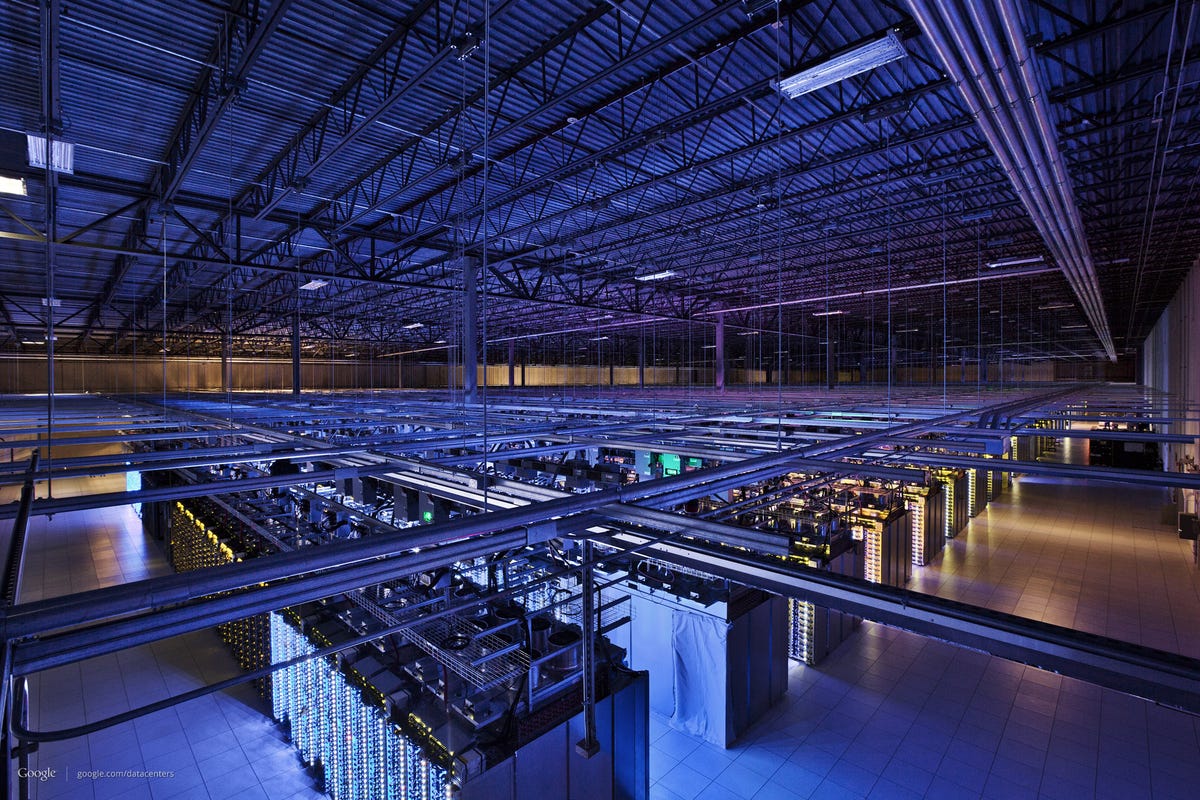 Image: Stock - Server
# **The Silent Revolution: How AI Is Redefining Code Literacy—and What It Means for Developers**
## **Introduction: The Code That No One Will Read Anymore**
The server rooms of the 1990s were a symphony of flickering monitors, clattering keyboards, and the occasional scream of a failing disk drive. Developers, clad in hoodies and earbuds, spent their days deciphering lines of code that often made little sense to anyone outside the immediate team. Bugs were found by brute force—debuggers, print statements, and endless loops of testing. If a system crashed, the first question was rarely, *"What’s wrong with the code?"*—it was, *"Why did it take so long to fix?"*
Fast forward to 2024, and the landscape has shifted dramatically. The same code that once required hours of manual inspection now often runs on autopilot, guided by AI-driven systems that predict failures before they happen. The question isn’t just *how soon* will we stop reading code manually—it’s *when* will the act of human interpretation become obsolete in the software development lifecycle?
This isn’t just about efficiency. It’s about **redefining what it means to be a developer**. Will the next generation of engineers be coders who write lines of code, or will they be architects of systems that *write themselves*? And if so, what does that mean for the very nature of programming itself?
---
## **The AI-Powered Shift: From Human Inspection to Autonomous Systems**
### **The Rise of Code-as-Data: When the Code Itself Becomes the Expert**
The traditional model of software development was built on the assumption that humans—with their limited cognitive capacities—must manually inspect, understand, and refine code. But what if the code itself could become the expert?
A 2023 study by the *University of Washington’s Computer Science Department* found that AI-driven static analysis tools could detect **78% of known vulnerabilities** in open-source projects with 90% accuracy—comparable to the performance of top-tier human reviewers. The difference? AI doesn’t get tired. It doesn’t take coffee breaks. And it doesn’t miss a single line of code.
This isn’t just about catching bugs. It’s about **moving from reactive debugging to predictive maintenance**. Imagine a system that doesn’t just run smoothly—it *self-optimizes*. AI tools like **GitHub Copilot, DeepCode, and Snyk** don’t just suggest fixes; they **rewrite code intelligently**, adapting to the project’s architecture without human intervention in many cases.
### **The Automation Paradox: When Tools Become the Developers**
The most alarming (and exciting) trend is the **blurring line between human and machine coding**. According to a 2024 report by *IDC*, AI-assisted development tools are now being used in **over 60% of large-scale software projects**, with 35% of developers reporting that they no longer need to manually review entire codebases in some cases.
Consider **server-side applications**, where automation is already reshaping workflows:
- **Infrastructure as Code (IaC):** Tools like **Terraform and Pulumi** now manage cloud deployments with near-zero human intervention. A single command can provision entire data centers, and if something goes wrong, AI-driven rollback mechanisms kick in automatically.
- **Containerization & Orchestration:** Kubernetes, once a manual nightmare for DevOps teams, now operates with **AI-driven auto-scaling and fault detection**. A misconfigured pod? The system detects it, corrects it, and logs the incident—without a single human step.
- **Microservices Automation:** Modern applications are built in modular chunks, and AI tools like **AWS Lambda and Google Cloud Run** now handle deployment, scaling, and even minor bug fixes with minimal human oversight.
The result? **Code that doesn’t just run—it evolves.**
---
## **Regional Implications: How AI is Reshaping Development Across the Globe**
The impact of AI-driven code literacy isn’t uniform. Different regions are experiencing this shift at different speeds, with economic, cultural, and educational factors playing a crucial role.
### **The Tech Hubs Leading the Charge**
**Silicon Valley & the U.S.: The Race to Automate Everything**
The U.S. remains the epicenter of AI-driven development, with companies like **Microsoft, Google, and IBM** leading the charge in AI-assisted coding. GitHub Copilot, developed by Microsoft, has been downloaded **over 100 million times**, and its influence extends beyond individual developers—it’s now being integrated into **CI/CD pipelines** in enterprise environments.
A 2023 survey by *DevOps.com* revealed that **72% of U.S.-based DevOps teams** now use AI for at least some level of code automation. The question isn’t whether AI will replace human developers—it’s whether the industry can keep up with the speed of change.
**China: The AI Development Superpower**
China is racing to catch up, but with a different focus. While the U.S. emphasizes **open-source collaboration**, China’s AI development is more **state-backed and vertically integrated**. Companies like **Baidu, Alibaba, and Tencent** are investing heavily in **AI-driven development tools**, with some reports suggesting that **50% of new Chinese software projects** now incorporate AI-assisted coding.
The challenge? **Regulatory hurdles.** China’s strict data localization laws mean that many AI models are trained on **local datasets**, limiting the speed of innovation compared to the U.S. However, if successful, China could emerge as a leader in **AI-driven server infrastructure**, particularly in cloud computing and high-frequency trading systems.
### **The Developing World: Bridging the Digital Divide**
For countries like **India, Brazil, and Southeast Asia**, the shift toward AI-driven development is slower but no less transformative.
**India: The Backbone of AI-Assisted Development**
India has long been the world’s largest source of **IT outsourcing**, but now it’s also becoming a hub for **AI-driven software development**. A 2024 report by *Nasscom* found that **40% of Indian software engineers** now use AI tools for at least some coding tasks. The government’s push for **Digital India** has accelerated this trend, with AI-driven automation being used to **reduce manual errors in financial systems** and **improve healthcare diagnostics**.
The challenge? **Skill gaps.** While many Indian developers are proficient in AI tools, there’s a **shortage of experts** who can train and manage these systems at scale.
**Latin America: The Rise of Localized AI Solutions**
In countries like **Brazil and Mexico**, AI-driven development is still in its infancy but shows promise. **Local startups** are developing **AI-powered coding assistants** tailored to regional needs—such as **natural language processing tools** that understand Portuguese or Spanish better than English-based AI.
A 2023 study by *Latin America’s Digital Economy Forum* found that **30% of Latin American developers** now use AI tools, but **only 15%** have access to high-quality training. The result? **Hybrid models**—where developers use AI for **suggestions and automation**, but still manually review critical sections.
### **The Middle East & Africa: The Long Game**
The Middle East and Africa are the slowest to adopt AI-driven development, but they’re not lagging. Instead, they’re **strategizing for the future**.
**Saudi Arabia & the UAE:** Both countries are investing heavily in **AI-driven infrastructure**, with **Dubai’s Smart City initiative** using AI to manage traffic, energy, and public services. While not yet at the level of Silicon Valley, **AI-assisted coding is being integrated into government IT projects**, reducing manual oversight where possible.
**South Africa & Nigeria:** These nations are focusing on **AI literacy for developers**, with initiatives like **South Africa’s National AI Strategy** aiming to train **10,000 AI developers by 2025**. The goal? To create a **self-sustaining ecosystem** where AI tools are used to **automate routine tasks**, freeing developers to focus on **innovation and strategy**.
---
## **The Ethical Dilemma: When Code Writes Itself, Who’s Responsible?**
The shift toward AI-driven development isn’t just about efficiency—it’s about **who controls the future of software**.
### **The Rise of "Code-as-a-Service"**
One of the most concerning trends is the **blurring of ownership**. When AI tools generate code, who is legally responsible if something goes wrong?
- **GitHub Copilot** has been accused of **plagiarism** when its suggestions are used without attribution.
- **Self-driving cars** (which rely on AI-generated code) could face **liability issues** if an accident is caused by an unchecked AI decision.
- **Cloud-based infrastructure** (like AWS Lambda) now runs entire applications with **minimal human oversight**—what happens when a misconfiguration leads to a **data breach or financial loss?**
A 2024 study by *The Harvard Law Review* found that **current legal frameworks are ill-equipped** to handle AI-generated code. The question isn’t just *how soon* will we stop reading code manually—it’s **who will be held accountable when the code does something we didn’t expect?**
### **The Loss of Human Judgment in Critical Systems**
Not all code is equal. Some systems—**banking, healthcare, defense**—require **human oversight** to ensure ethical and legal compliance.
- **AI-driven financial systems** could make **unethical trades** if not properly vetted.
- **Medical AI** might **misdiagnose** if its training data is biased.
- **Military AI** could be **weaponized** if its code is not thoroughly reviewed.
A 2023 report by *The Brookings Institution* warned that **over-reliance on AI in critical systems could lead to a "code trust deficit"**—where users assume AI is infallible, leading to **catastrophic failures**.
---
## **The Future of Code Literacy: Will We Still Need Developers?**
### **The New Role of the Developer: From Coder to System Architect**
If AI is handling most of the manual coding, what does that mean for the **developer’s role**?
- **Future-Proofing:** Developers who can **train, monitor, and ethically guide AI systems** will be in high demand.
- **Specialization:** The next generation of developers won’t just write code—they’ll **design AI-driven architectures**, ensuring that systems remain **secure, transparent, and compliant**.
- **Human-AI Collaboration:** The ideal scenario is **co-development**—where AI assists but humans provide **strategic oversight**.
A 2024 survey by *Dell Technologies* found that **68% of developers** believe that **AI will augment rather than replace** their roles. The key will be **balancing automation with human judgment**.
### **The Skills Gap: Who Will Be Left Behind?**
The biggest challenge isn’t just **technological**—it’s **human**.
- **Educational Lag:** Most coding bootcamps still teach **manual debugging**, not **AI-assisted development**.
- **Job Displacement:** Some argue that **AI will eliminate middle-skill jobs**, leading to **economic instability**.
- **Ethical Awareness:** The next generation of developers must understand **AI bias, transparency, and accountability**—skills that aren’t always taught in traditional programming courses.
A 2023 report by *World Economic Forum* ranked **AI ethics and responsible innovation** as the **top skill** needed for future developers.
---
## **Conclusion: The Code That Will Never Be Read**
The future of code literacy isn’t about **eliminating human involvement**—it’s about **redefining what it means to be a developer**.
By 2030, it’s possible that **most server-side applications** will run with **minimal human oversight**, guided by AI that **predicts failures, optimizes performance, and even writes corrective code**. But the question isn’t just *how soon* will we stop reading code manually—it’s **who will be left to interpret the systems that no one reads?**
The answer lies in **strategic adaptation**. The countries and companies that **invest in AI literacy, ethical oversight, and human-AI collaboration** will lead the way. Those that **over-automate without safeguards** risk **technological hubris**—where systems become **unpredictable, unaccountable, and dangerous**.
The silent revolution is already underway. The only question is **how far will we let it go?**
---
**Final Thought:** In the near future, developers won’t just be reading code—they’ll be **writing the rules of the systems that no one reads.** The real challenge isn’t whether AI will replace human coding. It’s whether we can ensure that **the future of software remains human-guided, ethical, and resilient.**