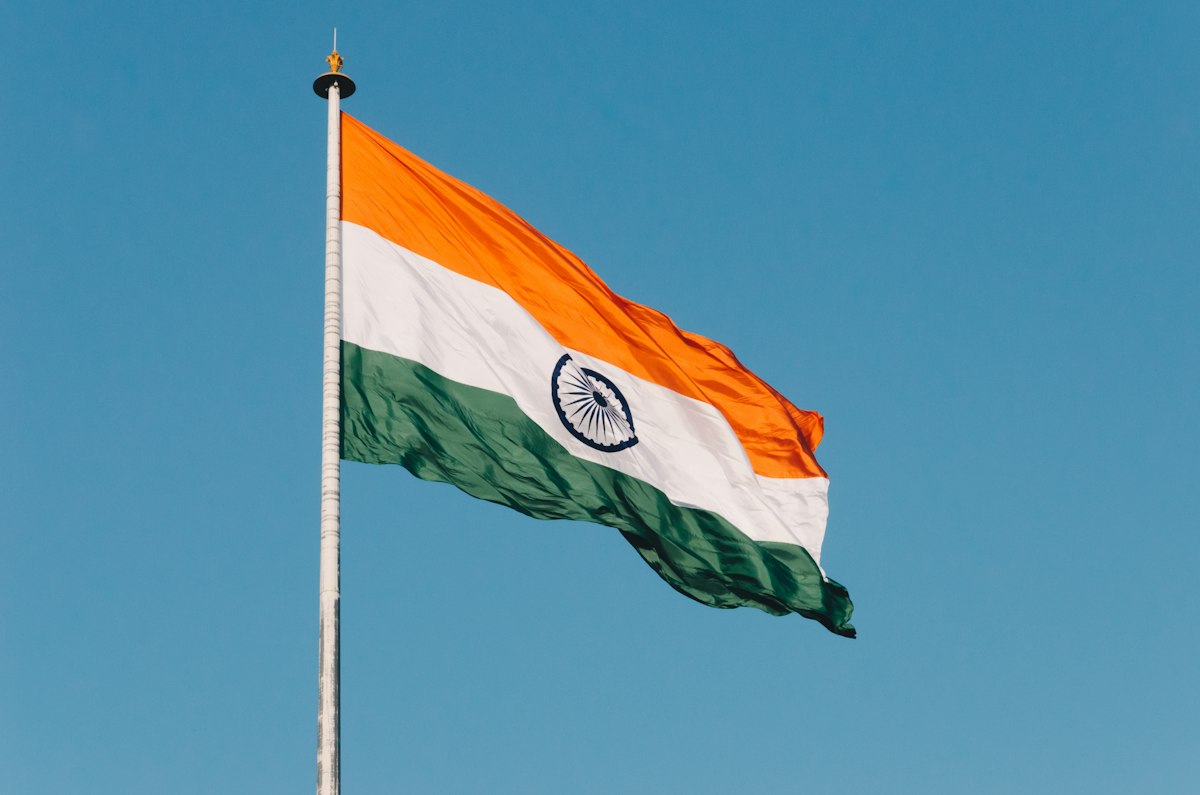
Re-Engineering Civic Identity: The Political Economy and Sociological Architecture of Mass Flag-Hoisting Campaigns in Modern India
The contemporary political landscape of the Indian republic is increasingly characterized by campaigns that fuse mass mobilization, state-sponsored symbolism, and digital governance. At the forefront of this sociopolitical evolution is the institutional push to transform national symbols from elite, institutional fixtures into decentralized, everyday artifacts of domestic life. What began as an official commemorative feature under the umbrella of Azadi Ka Amrit Mahotsav—marking 75 years of Indian independence—has evolved into a recurring framework for public engagement: the Har Ghar Tiranga (Every House a Tricolor) initiative. Spearheaded by Prime Minister Narendra Modi, this effort demands rigorous analysis not merely as a seasonal event of patriotic display, but as a deliberate re-engineering of civic identity, domestic space, and state-citizen relations.
To understand the depth of this transition, one must look beyond the immediate visual spectacle of millions of tricolors fluttering atop suburban roofs, rural homes, and commercial skyscrapers. The campaign signifies a pivotal shift in how the state mobilizes the populace, moving away from passive civic duty toward active, performative nationalism. By examining the legal transformations, economic supply chains, digital mechanisms, and federal dynamics surrounding the campaign, this analysis explores how symbolic politics is operationalized to construct a unified national consciousness within a hyper-diverse federal democracy.
I. The Evolution of Flag Jurisprudence: From Institutional Monopoly to Popular Access
The democratization of the Indian National Flag is not an overnight phenomenon; it is rooted in decades of legal friction, constitutional debate, and legislative modifications. For the first half-century following Independence, the display of the national flag was strictly regulated by the Emblems and Names (Prevention of Improper Use) Act, 1950 and the original Flag Code of India. Under these statutes, private citizens were generally prohibited from flying the tricolor on non-national holidays, confining the flag primarily to government buildings, military installations, and high offices of state.
This restrictive regime was fundamentally challenged by industrialist and parliamentarian Naveen Jindal in the late 1990s, culminating in a landmark Supreme Court judgment in 2004 (Union of India v. Naveen Jindal). The Supreme Court ruled that flying the national flag with respect and dignity is a fundamental right guaranteed under Article 19(1)(a) of the Constitution of India, which protects freedom of speech and expression. The court declared:
"To express pride and loyalty to one’s nation by hoisting the National Flag is an integral part of the fundamental right to freedom of speech and expression, provided the display does not violate the dignity accorded to the symbol."
Despite this constitutional victory, practical barriers to widespread adoption remained. Chief among them was the regulatory insistence that flags be made exclusively of hand-spun and hand-woven Khadi—cotton, silk, or wool—a mandate designed to honor the Gandhian ethos of self-reliance (Swadeshi) and support rural artisans. While historically rich, this requirement created severe supply-side bottlenecks that prevented mass-scale domestic ownership.
Key Legislative Milestones in Flag Accessibility
- 1950: Enactment of the Emblems and Names Act, restricting public use.
- 2002: Adoption of the updated Flag Code of India, relaxing timing and location constraints.
- 2004: Supreme Court declares flag display a fundamental right under Article 19(1)(a).
- December 2021: Amendment allowing machine-made polyester flags, unlocking industrial mass production.
- July 2022: Amendment permitting round-the-clock (day and night) flag display in residential settings.
The strategic turning point occurred in December 2021, when the Ministry of Home Affairs amended the Flag Code of India to allow flags manufactured from polyester and produced via automated machinery. A subsequent amendment in July 2022 allowed the tricolor to remain hoisted outdoors or on private residences both day and night, eliminating the historical mandate to lower the flag at sunset for private citizens. These legal changes removed manufacturing and operational constraints, converting the flag from a scarce, carefully guarded icon into a mass-producible consumer item.
II. The Political Economy of Mass Symbolism: Supply Chains, MSMEs, and Livelihoods
Transitioning from an elite legal right to a household ritual required immense logistical capabilities. The requirement to supply over 200 million households with uniform national flags created unprecedented logistical demands, requiring coordinated efforts across state institutions, micro, small, and medium enterprises (MSMEs), self-help groups (SHGs), and logistics networks.
The economic impact of this pivot was twofold, creating new industrial supply chains while shifting traditional artisan markets:
1. Industrial Scale-Up and Public Sector Logistics
By permitting polyester, the government brought India’s massive textile manufacturing centers—particularly in Surat (Gujarat), Coimbatore (Tamil Nadu), and Bhilwara (Rajasthan)—into national civic supply chains. Textile mills operated around the clock to produce billions of meters of tricolor fabric. To solve the distribution challenge, the government deployed India Post, the nation’s vast postal network.
During the inaugural 2022 campaign, India Post distributed more than 13 million national flags through its physical post offices and online e-commerce portal, leveraging its reach into remote rural areas. Flags were priced nominally at ₹25 (approximately $0.30 USD), subsidized effectively through public procurement efficiency, ensuring affordability across socioeconomic strata.
2. Grassroots Self-Help Groups (SHGs) and Rural Livelihoods
To prevent total market capture by large textile conglomerates, state governments routed procurement contracts through women’s Self-Help Groups under the National Rural Livelihood Mission (NRLM) and urban poverty alleviation schemes. Millions of rural women were mobilized to stitch, pack, and distribute flags locally.
| Metric / Stakeholder Domain | Operational Footprint | Socioeconomic Impact |
|---|---|---|
| India Post Distribution Network | 1.5+ lakh post offices mobilized nationwide | Democratized access; delivered over 13-15 million flags directly to rural/remote doorsteps. |
| Women's Self-Help Groups (SHGs) | Over 500,000 SHG members engaged across states | Generated local income streams, supplementary wages, and skill development in textile assembly. |
| Textile Hubs (Surat, Bhilwara) | Machine-manufactured polyester output | Rapid scaling of production; produced hundreds of millions of flags within tight 60-day windows. |
| Traditional Khadi Sector | Karnataka Khadi Gramodyoga Samyukta Sangha (KKGSS) | Experienced institutional displacement; raised concerns over the preservation of heritage craft traditions. |
3. The Friction with Traditional Khadi Production
This rapid industrialization sparked economic and philosophical debates. The Hubballi-based Karnataka Khadi Gramodyoga Samyukta Sangha (KKGSS), the only federation certified by the Khadi and Village Industries Commission (KVIC) to manufacture official flag cloth, saw its near-monopoly disrupted. KKGSS workers staged strikes, arguing that allowing cheap polyester flags undermined the economic security of traditional rural weavers and compromised the historical link between the independence movement and Khadi. This tension highlighted a fundamental policy choice: prioritizing historic artisan preservation versus achieving maximum, low-cost popular participation.
III. Digital Mobilization, Gamification, and Civic Technology
A central feature of modern state-led mobilization in India is the integration of digital technology. The campaign relied on tailored civic tech applications designed to measure, gamify, and encourage public participation.
The Ministry of Culture launched dedicated digital portals where citizens were encouraged not only to fly the flag physically, but to record their participation digitally. This was achieved through two principal mechanisms:
- "Pin a Flag": A geo-spatial feature enabling users to drop a virtual pin on an interactive map of India, marking their home or workplace as a location where the tricolor was displayed.
- "Selfie with Tiranga": A digital repository where citizens uploaded photographs of themselves with the national flag. In the inaugural year alone, over 60 million selfies were submitted, climbing higher in subsequent iterations.
"Digital platforms transform passive compliance into active civic performance. When a citizen pins a flag online or downloads a personalized government certificate of appreciation, nationalism transitions into an interactive, shareable civic activity."
This digital architecture served several strategic functions. First, it harnessed social media mechanics—such as peer validation, visual performance, and instant certification—to drive viral engagement. Second, it provided the state with real-time data on participation metrics down to the district and block levels, allowing local administrators to identify regions with lower engagement and target additional promotional efforts.
By rewarding participation with digital certificates co-branded with government seals, the state created a sense of civic duty tied to digital inclusion. This integration of national symbolism with personal identity exemplifies how technology can amplify mass civic movements in the digital age.
IV. Sociopolitical Implications: Federalism, Public Space, and Civic Duty
Beyond economics and logistics, the mass deployment of national symbols carries profound sociopolitical implications, reshaping public space and federal interactions across India's diverse regions.
1. Domestic Space as Political Arena
Traditionally, state-led national symbolism operated within public domains—parade grounds, government secretariats, public schools, and diplomatic venues. The mandate of Har Ghar Tiranga effectively reshapes private domestic space into a site of public loyalty. By placing the flag on private balconies, rural homesteads, and apartment windows, the line between private living quarters and public civic performance becomes integrated.
Sociologically, this encourages horizontal community monitoring. When an entire neighborhood adopts flag displays, non-participation becomes noticeable. This visual consensus can generate subtle social pressure, effectively encouraging widespread compliance through peer alignment rather than explicit state mandates.
2. Federal and Regional Dynamics
In a federal structure comprising varied linguistic, cultural, and political traditions, central patriotic mandates interact with local dynamics in