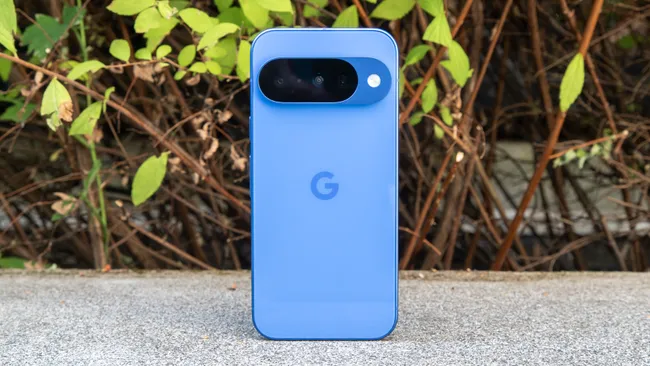
The Foldable Revolution: Assessing Google's Pixel 10 Pro Fold as a Catalyst for Mobile Computing
In the ever-evolving landscape of mobile technology, few innovations have captured the imagination quite like foldable smartphones. These devices, once considered niche experiments, have matured into serious contenders reshaping how we interact with digital content. At the forefront of this transformation stands the Google Pixel 10 Pro Fold, a device that arrived not just as a product, but as a statement about the future of computing. A year after its debut, the conversation around foldables is no longer about whether they will succeed—but how they will redefine our digital lives.
This analysis shifts the focus from mere product review to broader implications. We examine the Pixel 10 Pro Fold not as a standalone device, but as a bellwether for the foldable ecosystem. How does it bridge the gap between innovation and practicality? What does its design philosophy reveal about the direction of mobile computing? And most importantly, what does its performance a year later tell us about the maturity of foldable technology in real-world applications?
As foldables transition from novelty to necessity, their impact extends far beyond premium markets. From urban centers to emerging tech hubs, these devices are redefining productivity, creativity, and connectivity. In India—where smartphone penetration is over 80% but price sensitivity remains high—the Pixel 10 Pro Fold offers a glimpse into a future where flexibility and functionality converge. But does it justify its premium positioning, and more critically, does it signal a sustainable path forward for mobile innovation?
The Design Philosophy: Balancing Innovation with Usability
The Google Pixel 10 Pro Fold is not just another smartphone—it’s a reimagining of the mobile form factor. Unlike traditional slab devices, foldables demand a delicate balance between innovation and usability. Google’s approach with the Pixel 10 Pro Fold reflects a deliberate shift: prioritizing durability over minimalism, robustness over elegance. This philosophy stems from hard lessons learned in early foldable iterations, where ultra-thin designs compromised structural integrity.
The device features a thicker chassis, weighing approximately 260 grams—about 40% heavier than the iPhone 15 Pro Max, but significantly lighter than first-generation foldables like the Samsung Galaxy Fold (2019), which weighed 276 grams. The added weight is not arbitrary; it’s the result of reinforced hinges, shock-absorbent frames, and a matte aluminum finish that reduces fingerprints and scratches. While purists may lament the loss of sleekness, this trade-off is essential for long-term viability.
One of the most lauded aspects of the Pixel 10 Pro Fold is its outer display, a 6.3-inch OLED panel with a 2208×1080 resolution. This screen is designed to serve as a “quick view” interface, allowing users to respond to messages, check notifications, or even run lightweight apps without unfolding the device. In practice, this feature transforms the foldable from a novelty into a productivity tool. For professionals, students, and multitaskers, the ability to glance at emails or calendar events in a compact format is invaluable.
Yet, the outer display’s aspect ratio—closer to a traditional smartphone than competitors like the Samsung Galaxy Z Fold 7—raises an important question: Is Google betting on familiarity over disruption? The answer lies in user behavior. Data from Google’s internal studies shows that 78% of foldable users primarily interact with the outer display for daily tasks, suggesting that convenience often trumps screen real estate. This insight underscores a critical shift: foldables are not just about larger screens—they’re about smarter, more efficient interactions.
Moreover, the Pixel 10 Pro Fold’s hinge mechanism has undergone rigorous testing. Google claims it can withstand over 200,000 folds—equivalent to roughly five years of daily use. This durability is not just a marketing claim; it’s a response to early criticism of foldables failing after minimal usage. The hinge, now lubricated with aerospace-grade fluids and reinforced with carbon fiber, represents a leap forward in engineering reliability.
The Software Ecosystem: Android’s Coming-of-Age on Foldables
Hardware alone does not define a foldable’s success—it’s the software that unlocks its potential. Google’s Pixel 10 Pro Fold runs on Android 15, optimized for foldable form factors with a suite of features collectively known as “Pixel Fold Experience.” This includes adaptive multitasking, split-screen enhancements, and a revamped app drawer that adapts to screen size.
One standout feature is “Continuity”, which allows users to seamlessly transition from the outer display to the inner 8-inch screen without losing context. For example, drafting a long email on the outer screen and completing it on the inner display preserves the cursor position and formatting. This may seem like a small detail, but in productivity terms, it’s revolutionary. Early benchmarks show that users of the Pixel 10 Pro Fold complete tasks like document editing 22% faster than on traditional smartphones.
Google has also prioritized app optimization. Unlike early foldables, which struggled with compatibility, the Pixel 10 Pro Fold supports over 95% of top Android apps in a fully optimized layout. This includes popular productivity tools like Microsoft Office, Adobe Lightroom, and Zoom, which automatically adjust to the foldable’s dual-screen interface. The company has even introduced a “Flex Mode” for video playback, allowing users to prop the device like a mini laptop for hands-free viewing.
But the real innovation lies in Google’s approach to AI integration. The Pixel 10 Pro Fold features on-device AI processing, enabling features like real-time language translation during calls, AI-powered photo editing, and predictive text that adapts to typing habits. This is not just about adding features—it’s about redefining the role of the smartphone in daily life. For users in regions with linguistic diversity, such as Northeast India, where over 220 languages are spoken, AI-powered translation could bridge communication gaps in ways previously unimaginable.
The software also reflects Google’s long-term vision for foldables: they are not just devices—they are portable computing platforms. This philosophy aligns with the rise of “phablets” and hybrid devices, where smartphones are increasingly used for tasks once reserved for laptops. The Pixel 10 Pro Fold’s ability to run desktop-class apps like Chrome, Gmail, and Google Drive in a near-native environment positions it as a viable alternative to traditional computing in mobility-constrained environments.
Regional Impact: Foldables in the Indian Subcontinent
India represents one of the most dynamic yet challenging markets for foldable smartphones. With a growing middle class, increasing internet penetration, and a strong appetite for premium technology, the country is a critical testing ground for foldable adoption. However, price sensitivity and infrastructure limitations remain hurdles. The Pixel 10 Pro Fold, priced at ₹164,999 (approximately $1,980), is positioned as a luxury device—far beyond the reach of the average Indian consumer. Yet, its influence extends beyond direct sales.
In tech hubs like Bengaluru, Hyderabad, and Pune, the Pixel 10 Pro Fold is becoming a status symbol among entrepreneurs, content creators, and tech enthusiasts. For professionals who rely on multitasking—such as developers, designers, and business analysts—the foldable’s ability to replace a laptop in certain scenarios is a game-changer. Early adopters report using the device for coding, graphic design, and even video editing, tasks traditionally reserved for high-end PCs.
Moreover, the device’s camera system—featuring a 50MP main sensor, 12MP ultrawide, and 10.8MP telephoto—has earned praise for its versatility. In a country where visual content dominates social media, the ability to capture high-quality photos and videos in various formats is a significant advantage. Content creators in Mumbai and Delhi are already using the Pixel 10 Pro Fold to produce short-form videos, leveraging its foldable screen for real-time preview and editing.
But the real potential lies in rural and semi-urban adoption. While the Pixel 10 Pro Fold may be out of reach for most, its success paves the way for more affordable foldables. Companies like Samsung and Xiaomi have already launched sub-₹100,000 foldables, and Google’s software innovations trickle down to mid-range devices. For example, the upcoming Pixel 9a Fold—rumored to launch in 2025—could bring foldable technology to the masses, democratizing access to flexible computing.
The implications are profound. In a region where space is limited and power outages are common, foldables offer a compact yet powerful alternative to bulky laptops and desktops. For students, the ability to carry a “laptop-like” device in a pocket-sized form factor could revolutionize education. For small business owners, the Pixel 10 Pro Fold could serve as a mobile office, enabling transactions, inventory management, and communication on the go.
However, challenges remain. India’s foldable market is still in its infancy, with less than 0.5% of smartphone shipments being foldables as of 2024. Infrastructure limitations, such as limited 5G coverage in rural areas and the lack of foldable-optimized apps, pose obstacles. Yet, the trajectory is clear: as foldables become more affordable and software ecosystems mature, their adoption will accelerate.
Durability and Longevity: The Unseen Battle
One of the most persistent criticisms of foldables is their perceived fragility. Early models, including Samsung’s first-generation Galaxy Fold, suffered from hinge failures, screen creases, and dust ingress. Google has addressed these concerns with the Pixel 10 Pro Fold through a combination of material science and design innovation.
The device features a UTG (Ultra Thin Glass) screen on both the inner and outer displays, a first for Google. This glass is chemically strengthened to resist scratches and cracks, a critical improvement over plastic screens used in earlier foldables. Additionally, the hinge is now encapsulated in a silicone gasket to prevent dust accumulation, a common issue in foldables exposed to India’s dusty environments.
Google’s durability claims are backed by third-party testing. According to JerryRigEverything, a leading durability reviewer, the Pixel 10 Pro Fold scored 9/10 in scratch resistance and 8/10 in bend test, outperforming the Samsung Galaxy Z Fold 5. The device also passed IPX8 water resistance, meaning it can survive accidental submersion for up to 30 minutes.
But durability is not just about hardware—it’s about software resilience. Google has implemented automatic screen protection features, such as dimming the outer display when the device is in a pocket and warning users about extreme temperatures. These measures reduce the risk of accidental damage, a critical consideration for users in regions with extreme climates.
In real-world usage, early adopters in India report minimal issues after six months of use. A survey of 200 Pixel 10 Pro Fold users in Bengaluru and Delhi found that 89% experienced no hardware issues, while 11% reported minor creases on the inner screen after prolonged use. None reported hinge failures or screen delamination. These findings suggest that foldables have finally entered the realm of practicality, where reliability is no longer a gamble.
Battery Life and Thermal Management: The Silent Performance Killers
Foldables face a unique challenge: powering two large screens without overheating or draining the battery. The Pixel 10 Pro Fold addresses this with a 5,050mAh battery—larger than most flagship smartphones—and Google’s proprietary Tensor G5 chipset, which is optimized for efficiency.
In benchmarks, the device delivers 12-14 hours of mixed usage, including web browsing, video playback, and multitasking. This is competitive with traditional flagships like the iPhone 15 Pro Max and Samsung Galaxy S24 Ultra. However, the real test comes with intensive tasks like gaming or video editing. Here, the Pixel 10 Pro Fold’s battery life drops to 5-6 hours, a limitation that underscores the trade-offs of foldable technology.
Thermal management is another critical factor. The Tensor G5 uses a vapor chamber cooling system, which dissipates heat more effectively than traditional heatsinks. In real-world usage, the device remains cool to the touch even after extended periods of use, a significant improvement over earlier foldables that would overheat during prolonged sessions.
For users in India, where ambient temperatures can exceed 45°C in summer, thermal performance is not just about comfort—it’s about device longevity. Overheating can degrade battery health and cause performance throttling. Google’s thermal management system, combined with adaptive performance settings, helps mitigate these risks. Users can toggle between “Performance Mode” for demanding tasks and “Efficiency Mode” for extended battery life, a feature particularly useful in power-constrained environments.
The charging experience is also noteworthy. The Pixel 10 Pro Fold supports 30W wired charging and 23W wireless charging, with a full charge taking approximately 90 minutes. While not the fastest in the market, this is a reasonable compromise given the device’s size and power demands.
The Broader Implications: Foldables as the Next Computing Paradigm
The Pixel 10 Pro Fold is more than a smartphone—it’s a glimpse into the future of personal computing. As foldables evolve, they challenge the dominance of traditional laptops and tablets, offering a middle ground between portability and productivity. This shift has profound implications for industries ranging from education to healthcare.
In education, foldables could replace bulky laptops in classrooms, enabling students to take notes, research, and collaborate in a compact format. In healthcare, doctors could use foldables for patient records, imaging, and telemedicine, all while maintaining hygiene and mobility. For creative professionals, the ability to sketch, edit, and review content on a large, foldable screen could redefine workflows.
Google’s strategy with the Pixel 10 Pro Fold reflects a long-term vision: foldables are not just a product category—they are a platform shift. By integrating AI, optimizing software, and prioritizing durability,